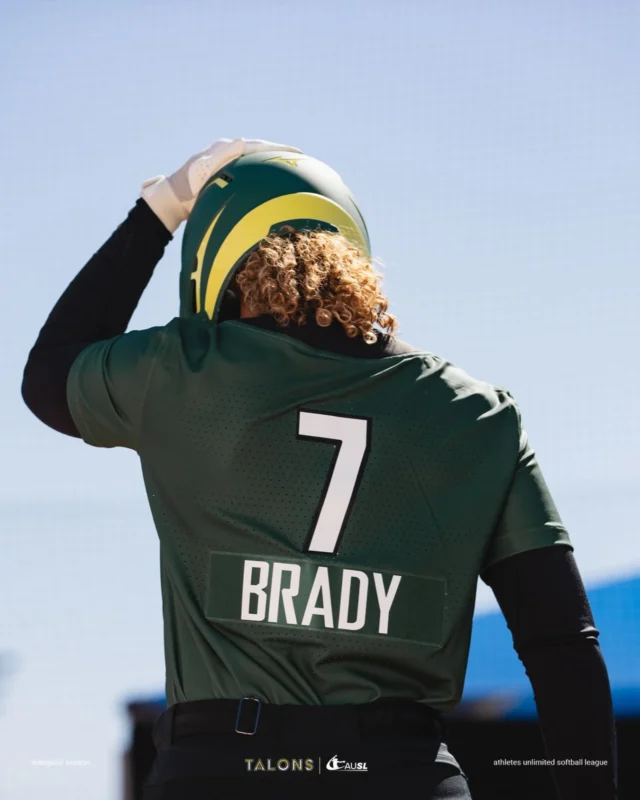
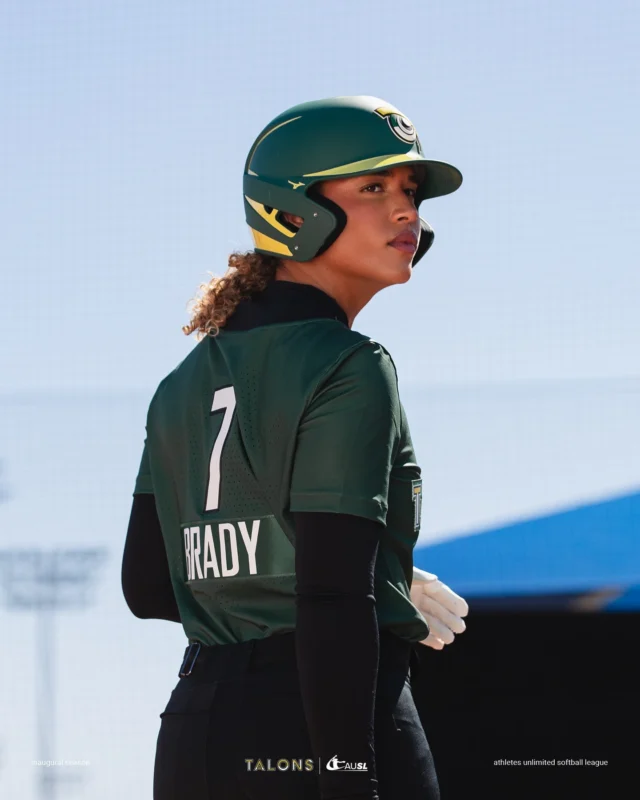
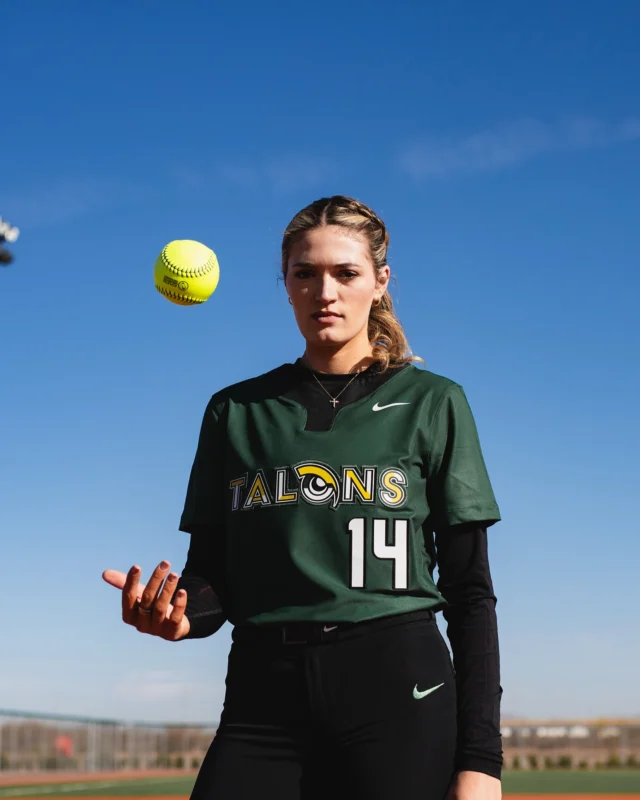
One year ago, Bri Ellis was searching for answers.
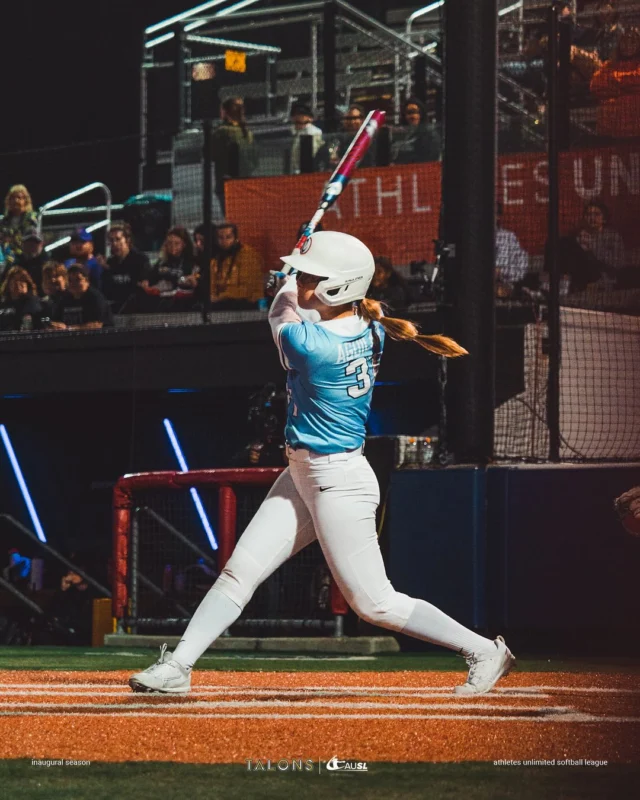
The 2025 USA Softball Collegiate Player of the Year arrived in the Athletes Unlimited Softball League after a decorated college career, but the transition to the professional game proved to be more challenging than she expected. Despite helping the Talons capture the inaugural AUSL Championship, Ellis hit just .186 with a .393 on-base percentage, .256 slugging percentage and a .649 OPS across 21 games.
The 2026 season has looked entirely different.
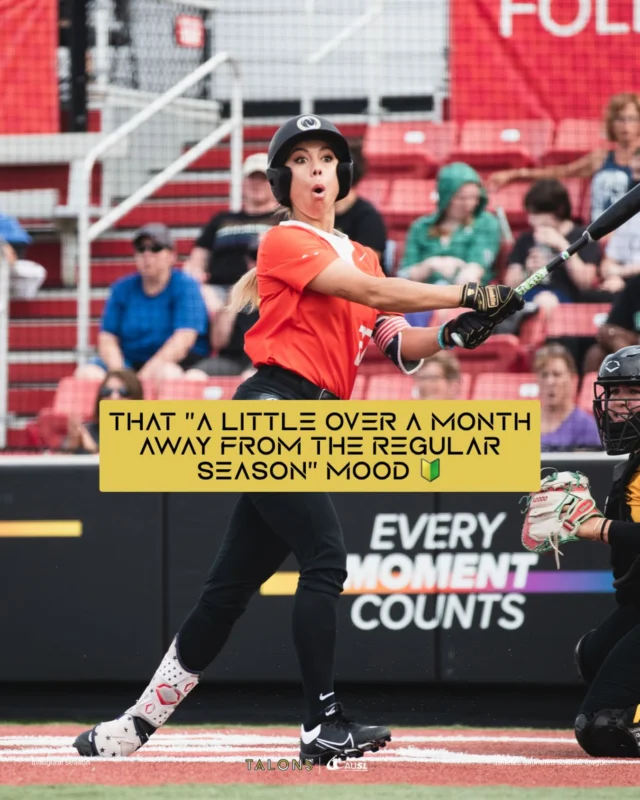
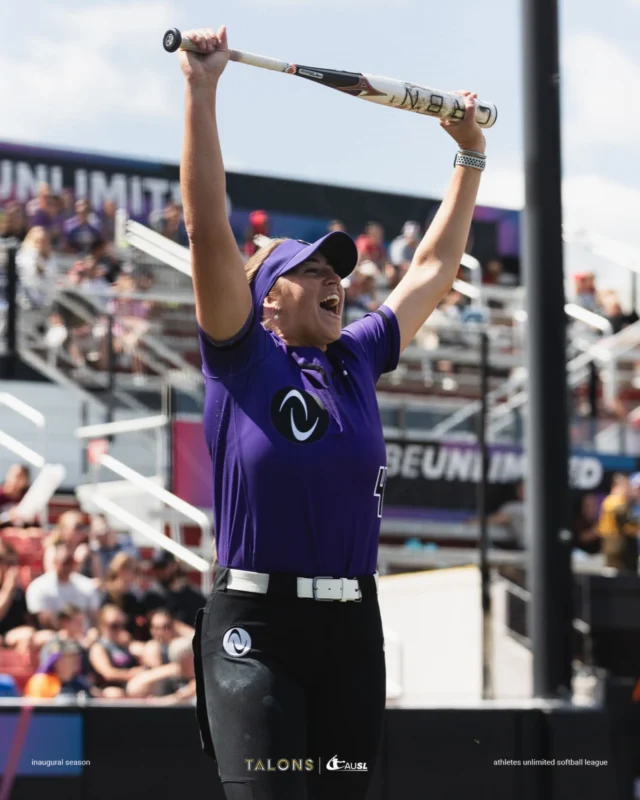
Ellis has reestablished herself as one of the league’s most dangerous hitters, batting .353 with a .765 slugging percentage and a 1.215 OPS while leading Utah in batting average, on-base percentage, slugging percentage, OPS and home runs. Through 18 games, she has totaled 18 hits, including five home runs and four doubles, while driving in 13 RBIs and scoring eight runs. She also ranks among the AUSL’s top 10 in batting average, on-base percentage, slugging percentage, OPS and home runs.
That performance earned her the inaugural 2026 AUSL Comeback Player of the Year Award, given annually to the player who most successfully returned to impact play after overcoming a major decline in on-field performance.
The offensive turnaround began with stepping away from softball.
A Vote of Confidence
After going from a full college season straight into her rookie professional campaign, Ellis realized she needed something she hadn’t had in years: time away from the game.
“I needed a break,” Ellis said, explaining that she didn’t pick up a softball again until January after taking over four months off from training.
The break helped her recharge physically, but when she returned to hitting, she realized the anxiety she’d carried through her rookie season hadn’t disappeared.
That’s when Talons General Manager Lisa Fernandez stepped in.
Rather than limiting their conversations to mechanics or game plans, Fernandez regularly checked in throughout the offseason, talking with Ellis about life outside of softball, her goals and how she was doing as a person. Those conversations led Fernandez to connect Ellis with sports psychologist Andrea Becker, while continuing to stay involved herself throughout the process.
Fernandez’s investment touched Ellis.
“Her still having faith in me was like, okay, there is still value in me as a player,” Ellis said. “I can still do this.”
Knowing someone she admired believed in her helped restore confidence before she even stepped back into the batter’s box.
Learning to Live in the Gray Area
Working with a sports psychologist wasn’t about fixing her swing.
Instead, Ellis spent months unpacking experiences that had shaped the way she approached the game, tracing the source of her anxiety and learning why certain situations caused her mind to race. Rather than searching for immediate solutions, she learned to become comfortable even when she didn’t have every answer.
“The biggest thing I got from the mental side of it… would be being okay with being in the gray area,” Ellis said.
Learning to live in the gray area was no small shift for Ellis.
Whether it was wondering why she popped up a pitch, why the mechanics of her swing felt off, or how quickly she’d regain her swing after returning from injury, Ellis had always searched for certainty. Now, she focuses on staying present instead of jumping to worst-case scenarios.
That philosophy now applies to every game and plate appearance.
“The goal is to always be where my feet are,” Ellis said. “Play the pitch in front of you, and then it will all work itself out.”
Winning the Game within the Game
Ellis hasn’t stopped studying her swing.
While her mental work happened away from the field, Fernandez also helped Ellis change the way she viewed the game itself.
One lesson in particular has stayed with her.
Fernandez often talks about “the game within the game,” which includes the small decisions that happen before the outcome of an at-bat. Instead of judging herself solely on whether she got a hit, Ellis learned to evaluate whether she had the right plan, went after the right pitch, or effectively worked the count.
“She loves to preach the game within the game,” Ellis said. “When I could simplify it and break it down pitch by pitch, it really changed the game for me in my brain.”
She still keeps detailed notes after at-bats, saves videos of swings that feel right and analyzes every small mechanical detail. The difference now is that those routines no longer consume her.
Instead of believing every swing has to feel perfect, she’s learned to trust her preparation, make adjustments within the game and accept that discomfort is part of competing at the highest level.
“I don’t have to feel perfect to get the job done,” Ellis said.
That mindset has allowed her to enjoy the game in a new way. Rather than chasing perfection, Ellis embraces the constant evolution that comes with a career in pro softball. Now, she celebrates individual positive decisions in an at-bat as much as a hit or RBI, and trusts that the work she’s put in will show itself over time.
The analytical hitter who once meticulously searched for answers in every swing is still there.
The difference now is that she’s no longer searching for certainty. She’s learned to trust herself, embrace the unknown, and let the game unfold one pitch at a time–and the results have followed.
Siera Jones is the digital media reporter at Athletes Unlimited. You can follow her on Instagram and X @sieraajones.