“My rookie outing wasn’t good either.”
It’s hard to imagine legendary pitcher Cat Osterman struggled on her first day as a pro. She had already become an Olympic gold medalist by then. But that’s exactly why she confided this to rookie NiJaree Canady.
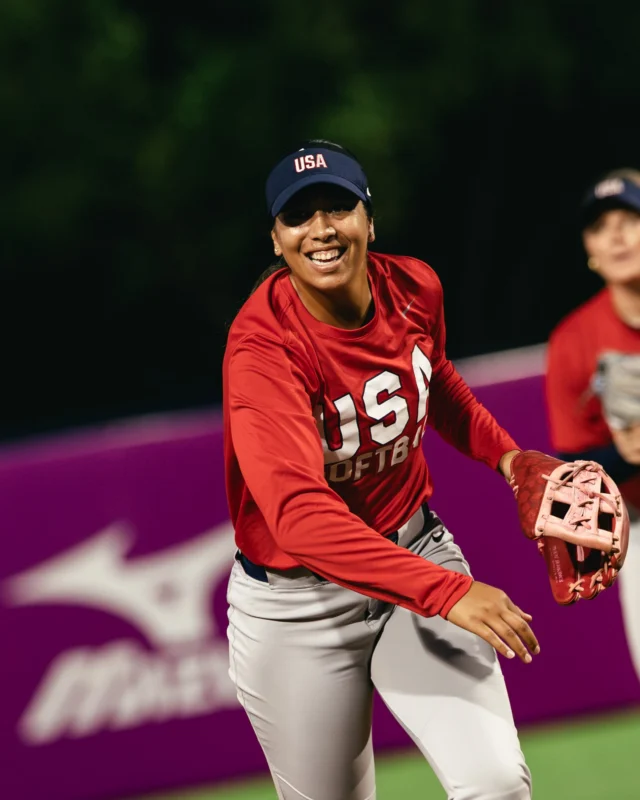
Canady is the most decorated athlete in the 2026 Athletes Unlimited Softball League Draft Class, but her transition to the pro game has been rocky. In 11.1 innings thus far for the Texas Volts, she has allowed 10 earned runs.
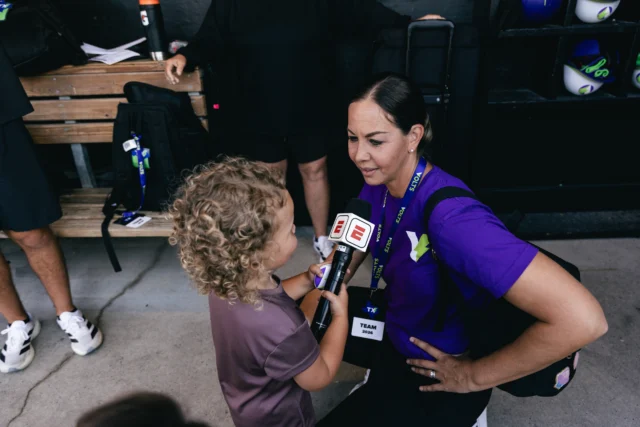
Osterman, a fellow USA Softball Player of the Year (she won it three times), knows what the pressure and expectation feel like. Now, as the Texas Volts general manager, she gives Canady the assurance she needed.
“She got her outing. It wasn’t pretty. I pulled her aside right away and was like, ‘My rookie outing wasn’t good either. This is not indicative of what you’ve done. This is not indicative of what you’re going to do,'” Osterman told her. “We’re here to help.”
First, they got Stanford pitching coach Tori Nyberg on the phone. Nyberg recruited Canady out of high school and was her pitching coach for the two years she played for the Cardinal. For almost two hours, Nyberg, Canady and Volts assistant coach Josh Trevino talked. They worked on a plan for what Canady needs to develop at the next level.

Trevino is a three-year coach at Texas State and helped build one of the Sun Belt Conference’s strongest pitching staffs. As he’s gotten to know Canady, a few things have stood out. She’s only 22, nowhere near her physical and mental peak. But it’s also made him understand “how NiJa Canady happens and how it’s not on accident.”
The high standard she holds herself to is evident. Even when he compliments improvement, she points out what’s lacking.
“She takes coaching phenomenally well, which high-level athletes don’t always do,” Trevino said. “I have been really impressed by how she carries herself in the developmental space, how quickly she can connect the dots from an athletic stance.”
One of those dots is Canady’s body positioning in her windup. As a high school athlete, Canady was “open” throughout her pitching motion with her chest facing third base. When she got to Stanford, Nyberg worked to shift to a “squared up” positioning facing home plate. Trevino explained this as thinking like a sprinter, with biomechanics that force her strength and energy into each pitch. When she’s open, it cuts some of that power off.
They’re working to get back to what they call “OG NiJa” after some nagging injuries at Texas Tech caused slight shifts in her mechanics.
Immediately, it’s helped her rise ball have much better shape, meaning spin, command, and movement.
“She’s still very hungry, which I think is impressive given the college career that she’s had. She sees that she can elevate her ceiling and she’s exhausting all of her resources to do that,” Trevino said.

Osterman knows what it’s like to make the phone call to those who know you best. In a professional career that spanned over a decade and three Olympic appearances, Osterman’s go-to was longtime national team coach, Ken Eriksen.
He first saw her at a camp when she was only 13 and was part of the national team program when she first wore the red, white and blue at 18.
“And so he kind of had always been my person,” Osterman explained. “There were a number of times throughout the course of my career I called Coach E and chatted with him about, ‘This is what the ball’s doing. What do you think could be? I’ve tried everything that I can think of. What do you think is going to be the key that helps get me back in a good position?'”
Pitching can be extremely individual, so having that person is important. But being open to feedback and adjusting is crucial to finding success at the pro level.
“We don’t get to just rest on what got us here. We have to figure out, how are you going to be good enough that you can compete now with athletes that are a little bit older, smarter, that have seen you throw in college and know what to expect?” Osterman said.
What Canady also expressed is the ability to see a bigger picture. In a bullpen this week with Trevino, she shared how much she’s enjoying the relearning because she wants to be able to teach others. One of her dreams is to open her own facility and give lessons.
Right now, she’s going through that process herself. And while the pro wins haven’t come yet, Osterman and the Volts staff aren’t concerned.
They see no ceiling for the player who is this naturally skilled and with a deep desire to develop.
“An athlete that’s open-minded, committed to being robust in their process, that’s a winner,” Trevino said.
Savanna Collins is the Senior Reporter for the AUSL. You can follow her on Instagram @savvyco.